
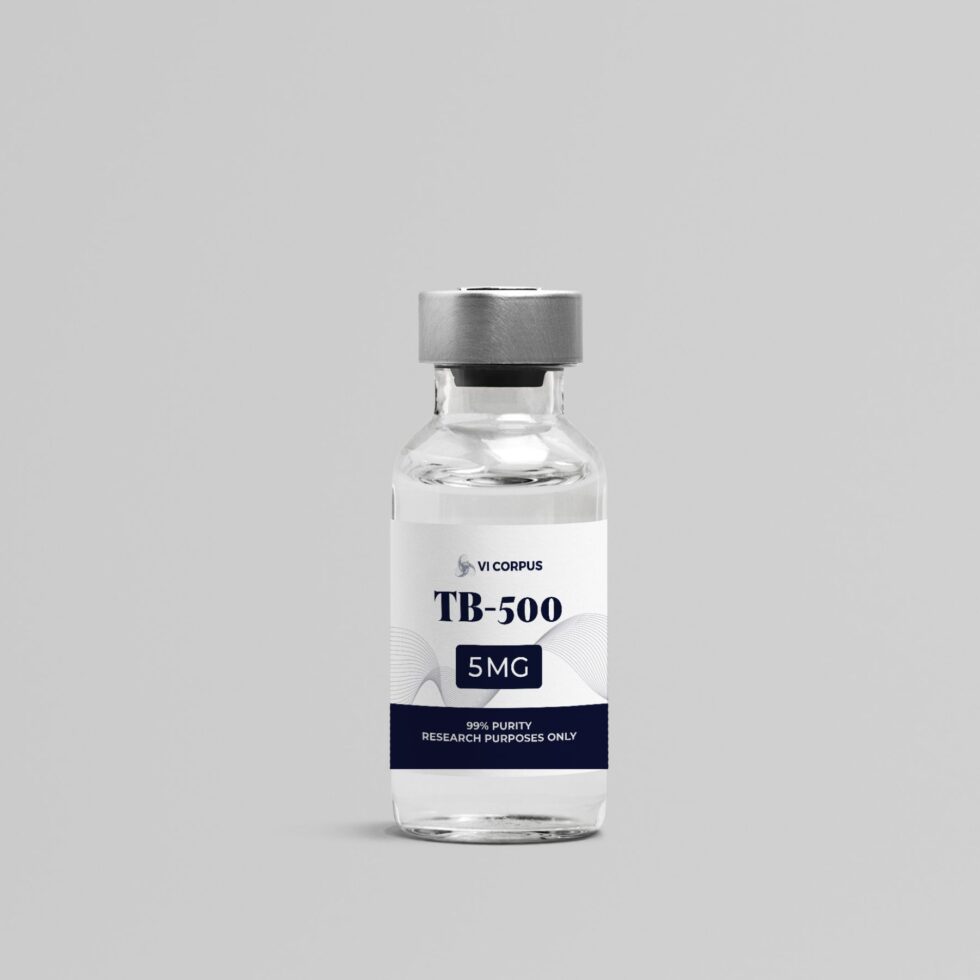
TB-500 Peptide
TB-500 is a synthetic peptide modeled after thymosin beta-4, a naturally occurring protein found in many human and animal tissues. It has gained attention in scientific and laboratory research due to its role in cellular repair mechanisms, inflammation modulation, and tissue regeneration pathways. This overview is intended strictly for educational and informational purposes.
What Is TB-500?
TB is a short-chain peptide consisting of amino acids designed to mimic specific biological actions of thymosin beta-4. In research settings, it is primarily studied for its interaction with actin, a protein essential for cell movement and structural integrity. By influencing actin regulation, TB is often examined for its potential role in cellular migration and wound-healing models.
Research and Scientific Interest
Researchers study TB for its potential involvement in:
- Supporting angiogenesis (formation of new blood vessels)
- Assisting cell differentiation and migration
- Modulating inflammatory responses in tissue studies
- Promoting recovery processes in experimental models
Because of these properties, TB-500 has been widely referenced in laboratory and preclinical research focusing on muscle tissue, connective structures, and cellular repair systems.
Quality and Handling Considerations
When evaluating peptide-based research compounds, factors such as purity, stability, and proper storage conditions are critical. TB-500 is typically supplied in lyophilized (freeze-dried) form to help maintain structural integrity during storage. All handling should follow appropriate laboratory safety protocols and regulatory guidelines.
Educational Disclaimer
TB-500 is not approved as a dietary supplement or pharmaceutical drug. It is not intended to diagnose, treat, cure, or prevent any disease. Any discussion of biological activity refers strictly to published research and experimental contexts.
Learn More from Scientific Sources
For readers interested in peer-reviewed and biochemical references, the following resources may be helpful:
- National Center for Biotechnology Information (NCBI): https://www.ncbi.nlm.nih.gov
- PubChem Compound Database: https://pubchem.ncbi.nlm.nih.gov
- World Anti-Doping Agency (WADA) Research Reports: https://www.wada-ama.org
Be the first to review “TB-500”
Related products
Melanotane-2
Erectile dysfuntion
PEPTIDES
GHK-CU
BPC157
CJC-1295
PEPTIDES
Melanotane-2
Reviews
There are no reviews yet.